planting & care
Thank you for giving this native plant a forever home. We hope you and many others enjoy observing and living with them for years to come. This page is dedicated to sharing our best recommendations for planting and care after you pickup your plants from the nursery, including thinking about tree protection. Please contact us with any questions - we are here for you!
Before You Plant: Remove the Fiber Container
REMOVE THE PLANT FROM THE FIBER CONTAINER! The container is made from 100% post-consumer recycled materials, but it is not biodegradable and should not be planted with the tree.
You may need to use a blade or scissors to carefully cut the pouch away from the root ball. Gently separate any roots that are caught against or wrapped around the pouch. See our video on this page for a demonstration.
Planting Instructions
1. Dig the hole.
Dig a hole slightly wider and slightly deeper than the root ball. Do not amend the soil. Your tree needs to become established in the soil it will ultimately grow in.
2. Plant at the correct depth.
Place the tree in the hole at the same depth it was growing in its container. Do not plant it deeper or shallower.
3. Water thoroughly.
Water with 3–5 gallons of water, applied slowly so the soil has time to absorb it.
4. Add mulch.
Apply a 6-inch layer of wood chips or other organic mulch in a wide ring around the tree. Keep the mulch a few inches away from the trunk. Mulch helps regulate soil temperature, retain moisture, and build healthy soil as it breaks down.
5. Check your tree regularly.
Until the tree goes dormant, check it at least once a week to see if it needs additional water. The soil should be moist, but not saturated. If you squeeze the soil and water runs out, it is too wet.
tree protection
If you have deer, rabbits, or other wildlife pressure, protecting newly planted trees can help protect your investment and promote faster growth.
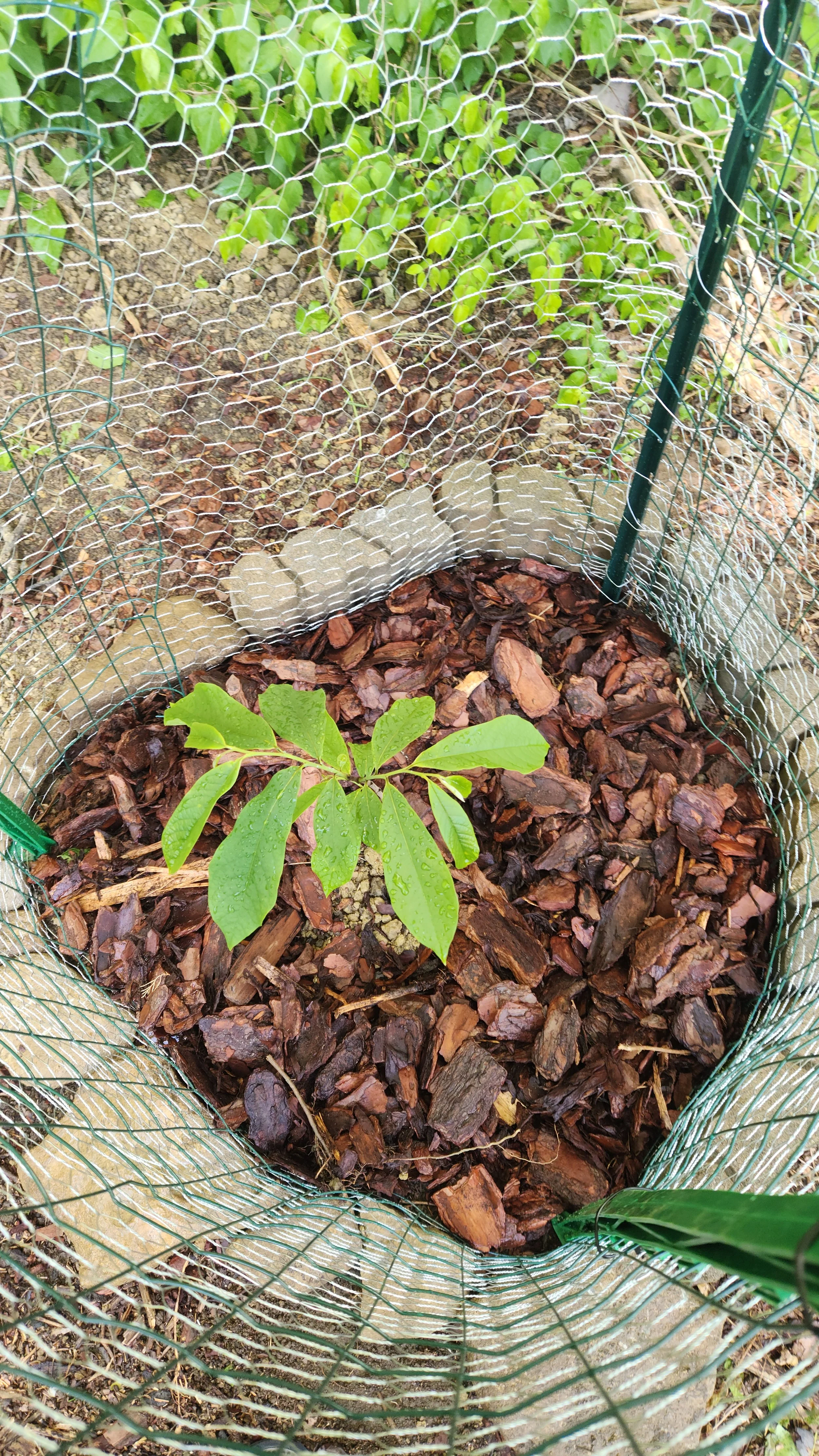
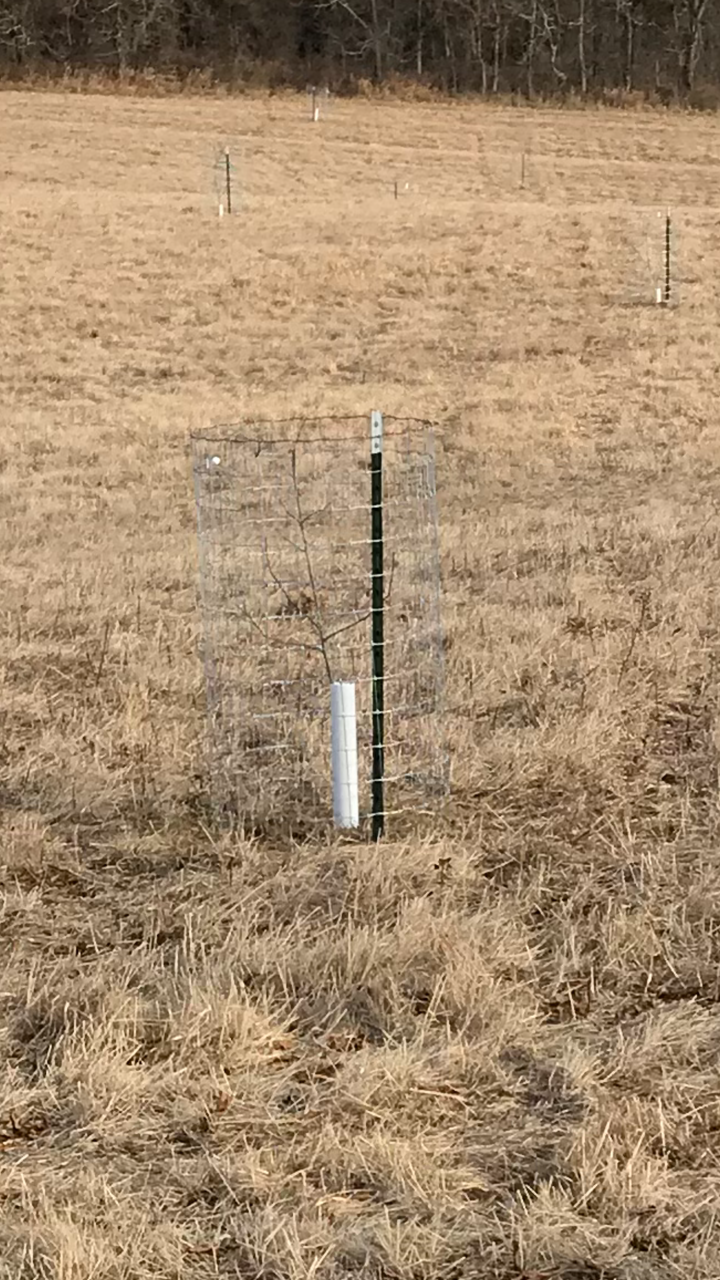
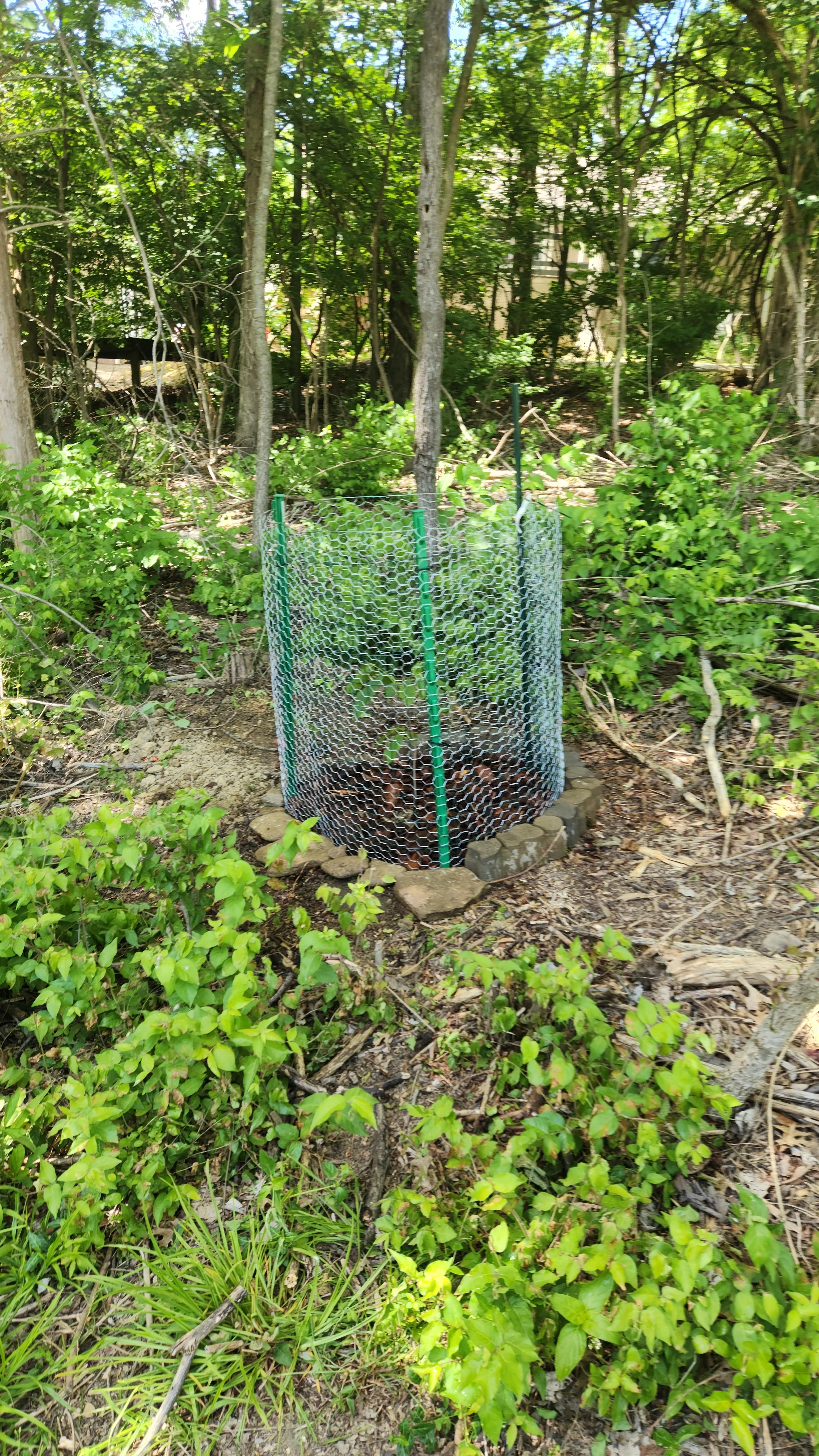
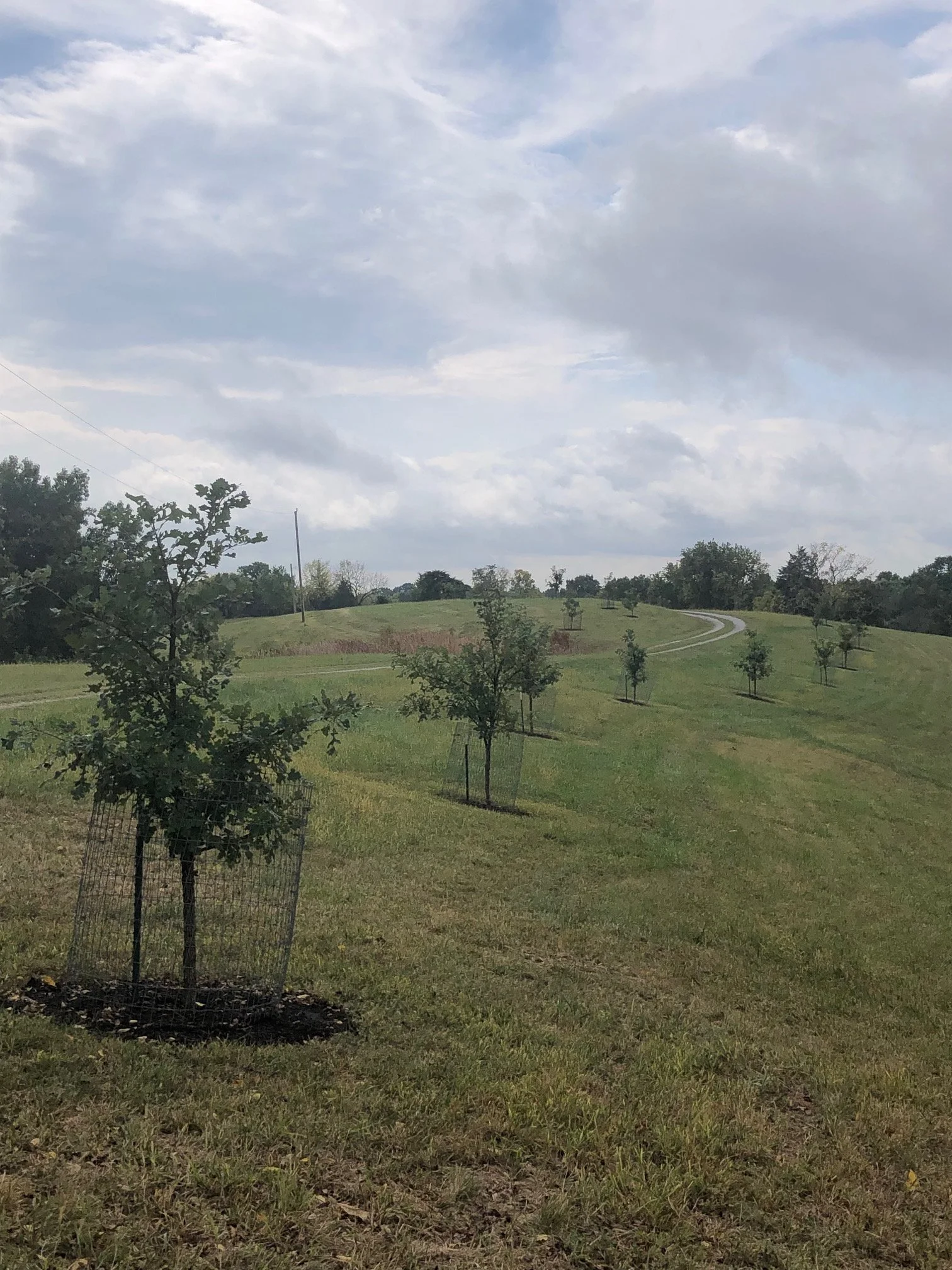
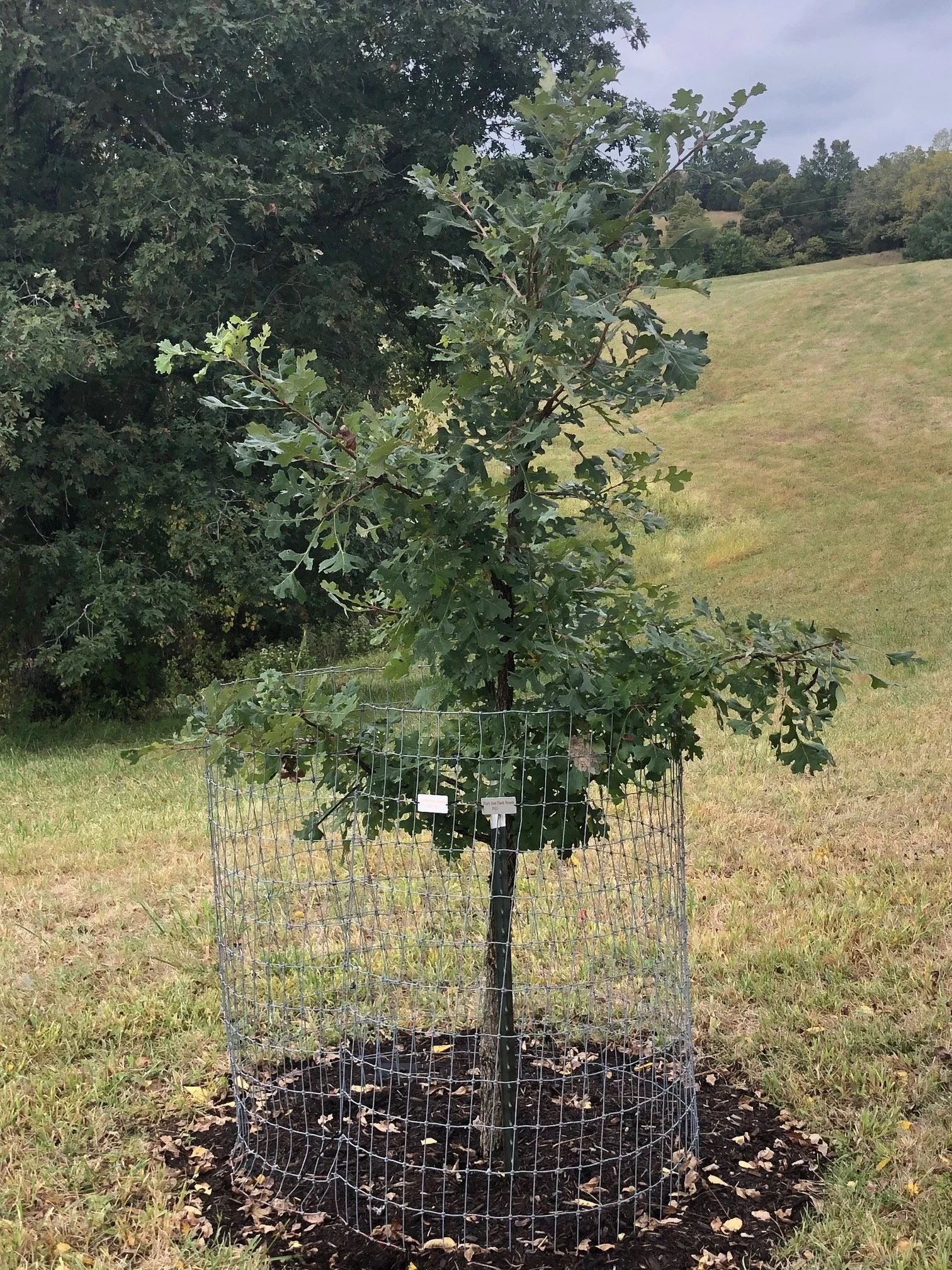
Tree cages can be built from chicken wire or welded cattle panels secured with fiberglass or steel T-posts. They are durable and reusable, but require more materials, labor, and installation time.
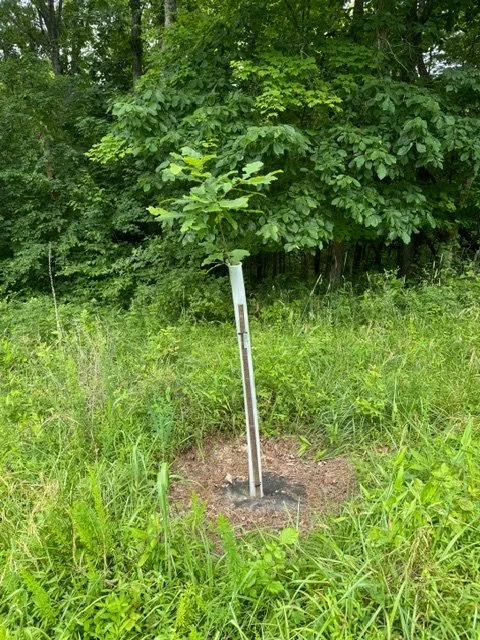
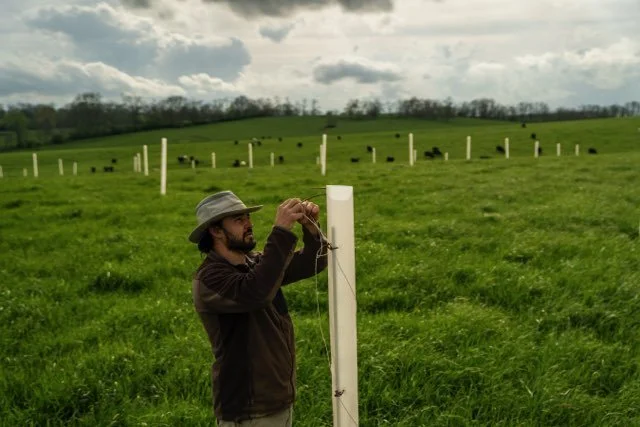
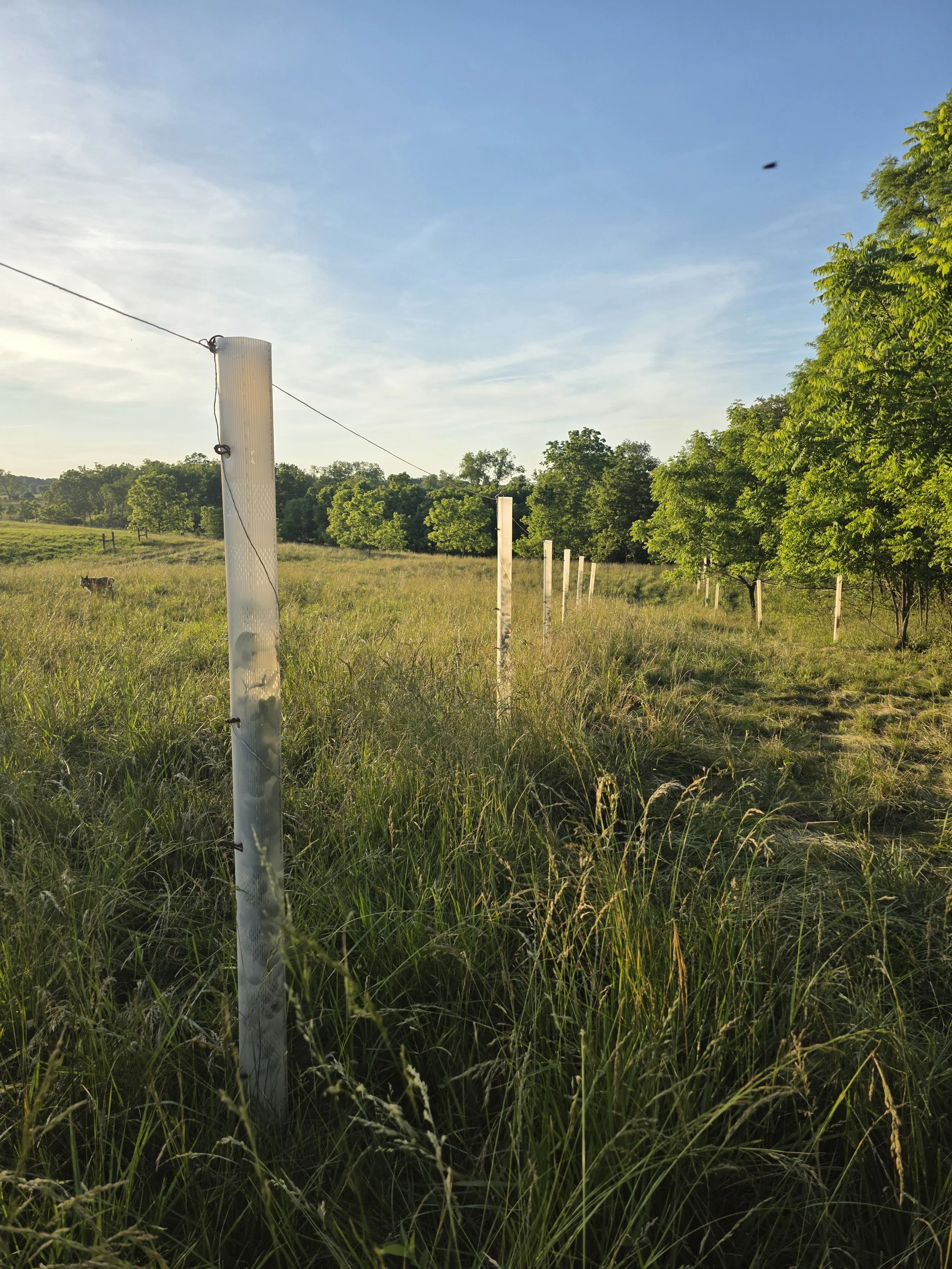
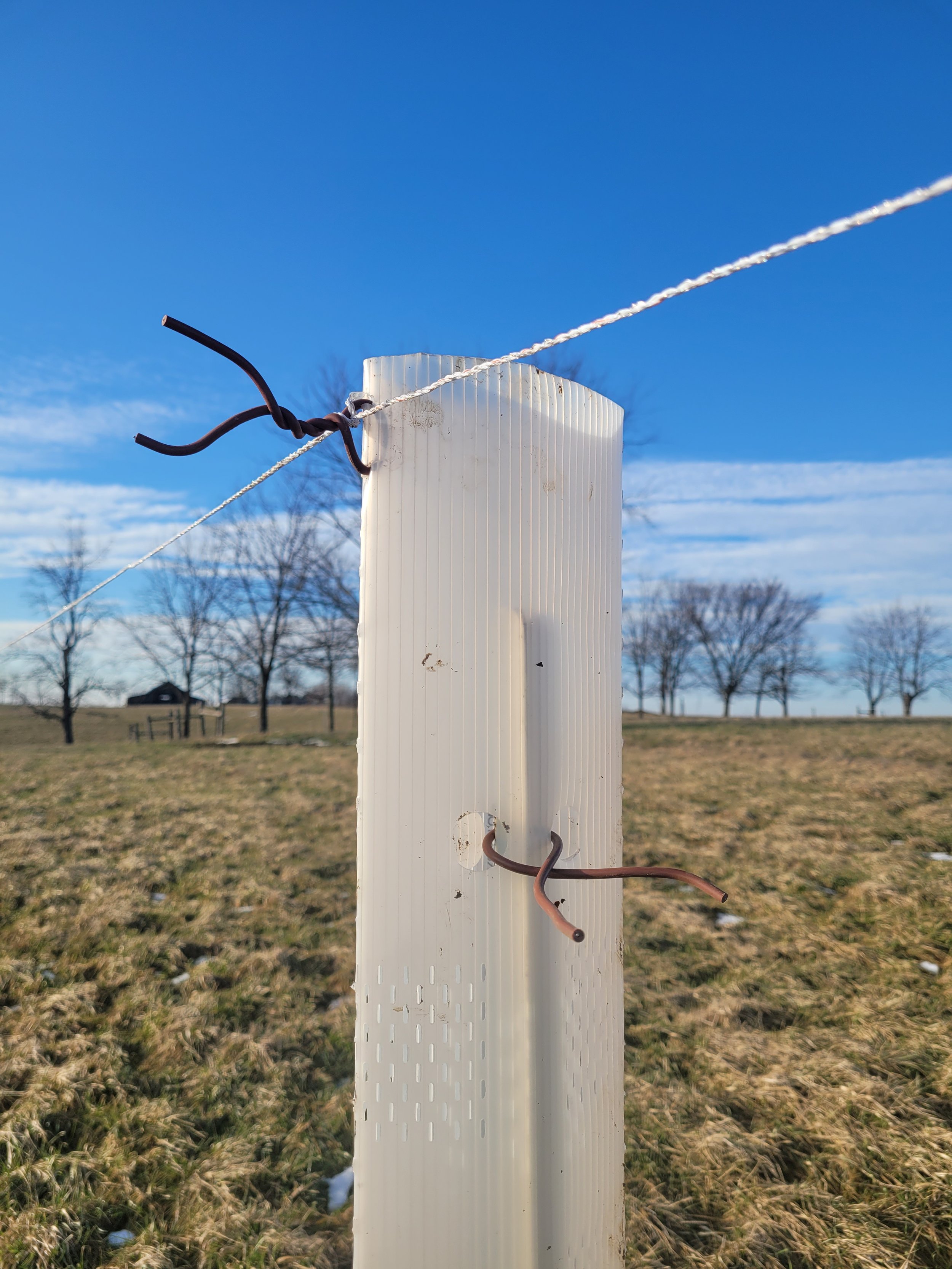
Tree tubes are another option and are generally quicker and easier to install. We plant hundreds of trees on our farm each year and have moved toward using Plantra tree tubes because of their thoughtful design for airflow, sunlight, and consistent growth. We like them enough that we also sell them through our nursery, so ask if you’d like to add these to your order.
Whatever protection you choose, it doesn't need to be permanent. The goal is simply to protect trees until they grow above the animals' browsing range—which may take around five years.
See the gallery below of photos from our farm and that customers have shared with us over the years.